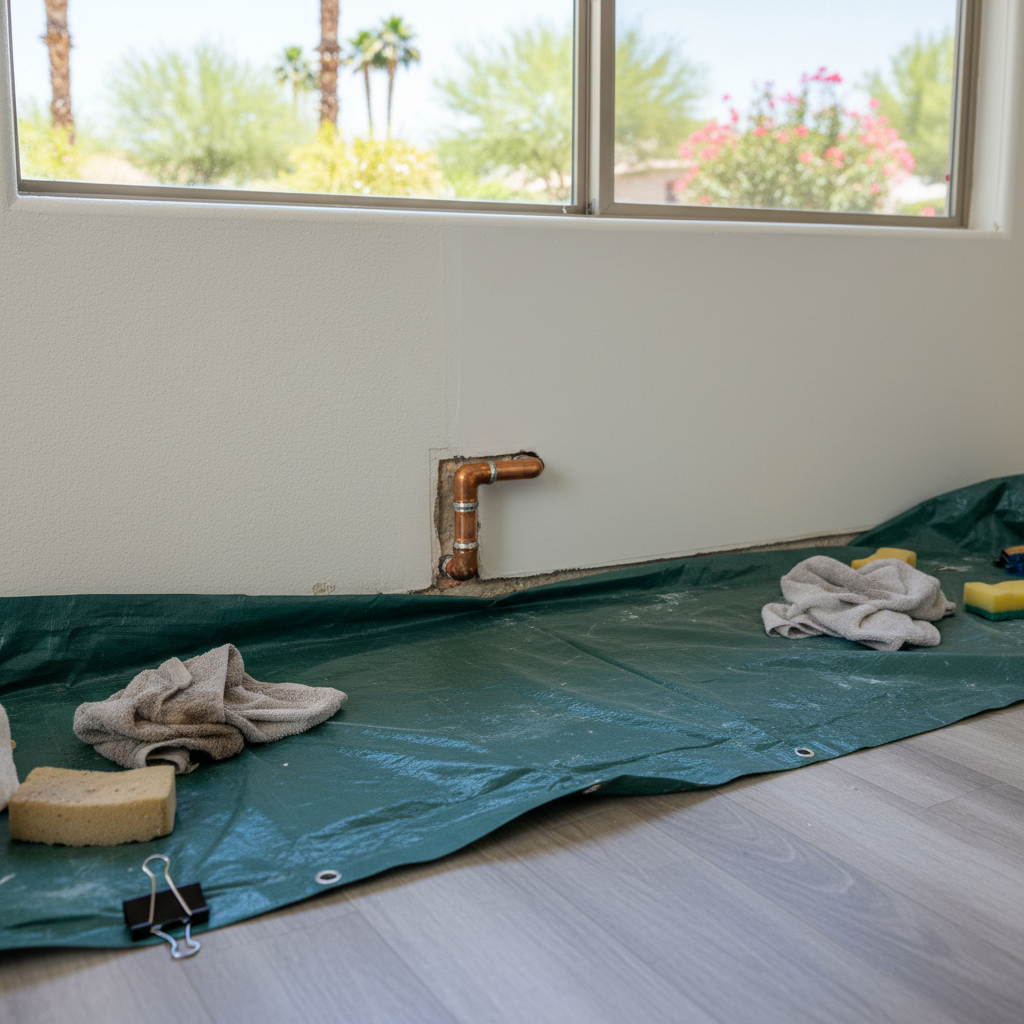
When a pipe bursts inside your home, the panic sets in fast. You are staring at a puddle on your floors or listening to water spraying behind a drywall partition, and you need to know what happens next. Ace Restoration gets called out to handle the aftermath of plumbing disasters across the East Valley all the time. Over the years, homeowners usually ask the same few questions when they are standing in three inches of standing water.
What is the very first thing I should do when a pipe bursts?
Shut off your main water valve immediately. Do not waste time trying to catch water with a bucket if you do not know where the shutoff is. In many homes around Gilbert, especially in established neighborhoods like Val Vista Lakes or the older parts near downtown, the main shutoff is located near the front street or inside a utility box near the garage. Once the water is off, cut power to any affected rooms if you can safely reach the breaker box, then call for professional help.
Do I call a plumber or a restoration company first?
You actually need both, but the sequence matters. A licensed plumber has to fix or replace the broken section of pipe to stop the leak at the source. However, a plumbing crew does not dry out your framing, pull up soaked carpet padding, or run industrial dehumidifiers. Ace Restoration coordinates with trusted local plumbers every day to make sure the repair happens alongside our structural drying process. Making one phone call to a team that manages both halves of the crisis saves you from chasing two different contractors.
How long does the cleanup and drying process actually take?
Most structural drying jobs in our desert climate take between three to five days. People assume that because it is hot and dry outside in Arizona, indoor water damage will just evaporate on its own. That is a myth. Water trapped inside cavity walls, beneath tile or luxury vinyl plank, or soaking into baseboards will not escape without high-velocity air movers and commercial dehumidifiers. Rushing this step invites mold growth within 48 hours, which turns a simple pipe fix into a massive remediation project.
Will my homeowners insurance cover burst pipe damage?
In most cases, yes. Sudden and accidental water damage—like a supply line snapping or a pipe splitting under pressure—is typically covered by standard policies. Where homeowners run into trouble is with slow, long-term leaks that went unnoticed for months, because insurance companies classify those as maintenance issues. Keep the broken piece of pipe if the plumber cuts it out, take plenty of photos before anything gets moved, and let your restoration crew document the moisture readings thoroughly for your adjuster.
Why did my pipe burst in the first place?
We do not get deep freezes like the Midwest, but Gilbert winters do experience occasional overnight lows that drop below freezing, catching outdoor spigots or poorly insulated garage supply lines off guard. Beyond temperature drops, high water pressure from municipal lines, aging polybutylene or corroded copper pipes, and shifting expansive soil can all put heavy stress on your plumbing system until a joint finally gives way.
Can I just dry it out with a few fans and a shop vac?
You can certainly pick up the surface water with a rental machine, but that leaves the hidden moisture behind. Drywall acts like a sponge, drawing water upward through capillary action. If you leave wet insulation inside the walls, the studs will rot and mold will thrive out of sight. Professional mitigation equipment measures moisture deep inside building materials to make sure your home is actually dry, not just dry-looking on the surface.